
Our oldest will graduate high school this year, and our youngest will leave the nest a couple of years later. Having kids grow up and leave provides an opportunity to reflect on many decisions we made when we had just started our family and purchased a home. This is my assessment of what worked, what didn't and what we might have done differently with the benefit of hindsight.
School District
We live in a scenic (and correspondingly pricey) coastal community in southern California. The way California neighborhoods are divided is simple: you can find less high cost housing with lousy schools, higher cost housing with bad schools in desirable destination neighborhoods, and higher cost housing with good schools.
Most families make a trade off: buy housing in an area where you can send your kids to reputable public schools, or a less high cost (there is no such thing as low cost) house in an area where you send you kids to public elementary schools and then pay for private school after that.
As a product of enclave public schools, my wife and I opted for the former and bit the bullet on buying a place in one of those unicorn communities with great public schools.
16 years later, I still think we made the right choice of community. The difference is, I now understand what makes a great public school district. The teachers are hit or miss, with a few outstanding ones making a huge positive difference in our children's education.
The secret sauce in a great public school district is the parents and kids. When you reach critical mass and attract professional parents who are invested in their kids' success, set high expectations for those kids' academic achievement, volunteer, and contribute in all the ways they are able, you get a successful district.
Because our community is comprised of enough of those families to attract more like-minded families, it perpetuates the virtuous cycle of success. That many of these characteristics are proxies for socioeconomic status is a sober acknowledgement of reality.
House Type
Where we live, most houses in our price range were built in the 50s, 60s or 70s. Each era has its own unique footprint.
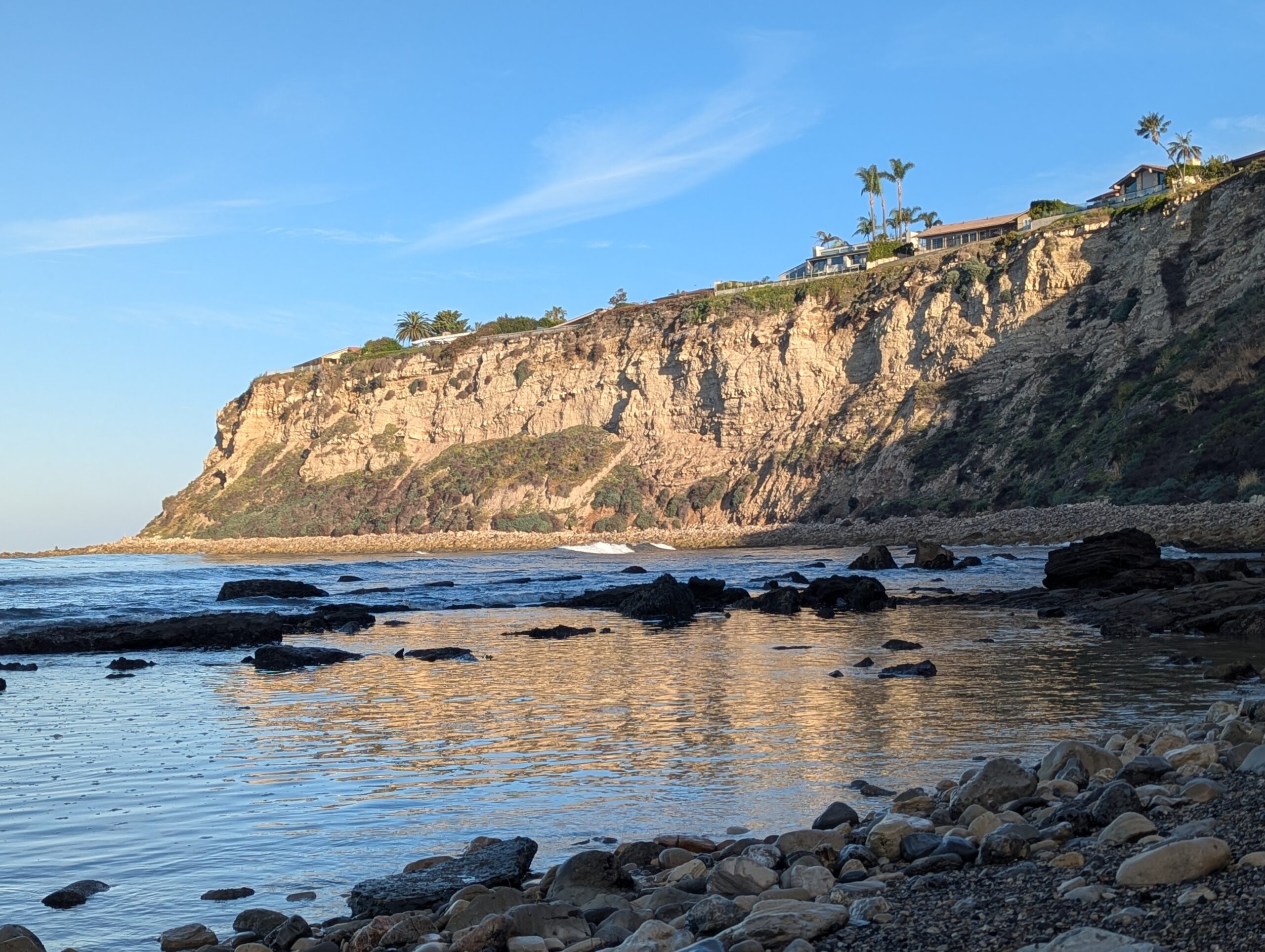
50s homes tend offer smaller square footage on larger lots, with huge front and backyards. Most are single story ranch houses. The layout is less functional, and the aesthetics are low ceilings, smaller living and sleeping spaces and limited storage. Occasionally an attic will be converted into usable space. Their electrical wires come from a tangled web of electrical lines connecting to old-fashioned telephone poles that pepper the streets. They are nearer to the cliffs overlooking the Pacific Ocean.
60s homes are similar to 50s homes except that they are usually stacked two story boxes.
70s homes tend to be custom builds with double the square footage of 50s homes on smaller lots. Kitchens and bathrooms are larger, and storage spaces are ample. A subset of 70s homes may include vaulted ceilings. Think capacious interior spaces with minimal yards.
After looking at perhaps 50 homes in the area, we were feeling disheartened. I felt tremendous stress at what our mortgage payments might be if we stretched. Most of the homes within our price range (this was 2005-2007) were fixer uppers resembling glorified tool sheds in picturesque locations.
Then 2008 happened. Through dumb luck, we found ourselves in a position of strength as buyers when the housing market crashed. We found a 70s home on a corner lot with vaulted ceilings, great light and 5 bedrooms. There were mature fruit trees, a small front yard, a large deck, and a school with an enormous field only a couple of blocks away. We made a bid, and our offer was accepted.
Yard
Our home has a small, open front yard and a large rear deck. When our kids were toddlers, we kept one room sparsely furnished to use as their indoor play room and toy storage area.
We lived a couple of blocks from an intermediate school with basketball courts and a huge grassy field and assumed that could always serve as our yard if we needed to run the kids in more space than our property came with.
While we definitely took advantage of the school in their tween years, we did not venture out often in their grade school years. They spent a lot of that time on the deck, and it would have been nice to have had an enclosed back yard where we could have let them get their energy out.
Hosting Capacity
When we bought our home, we had one toddler with a second on the way. We wanted space to host our out of area parents and family when they visited. This home allowed my wife and I to each have our own offices that could double as guest bedrooms for visiting family, and to give each kid their own room. It had abundant interior space, which the 50s houses did not, and that mattered to us.
It also had great aesthetics, reminding me of the prow of ship silhouetted against the sky. It called to mind a mini version of the house that 20 med students spent a long snow weekend sleeping in during our first year trip to Lake Tahoe - a combination of huge windows, wonderful light and cathedral ceilings that I found irresistible.
When our second child arrived and we were too overwhelmed to travel for holidays, we began hosting them. Thanksgiving saw us housing 7 adults and 2 children traveling from out of state in addition to our family of four - up to 13 people under one roof.
It was memorable (if not always comfortable), but I loved having the facilities to bring everyone together. In state family would drive up for the day
If I had to do it over again, I'm not sure I would have selected a place as big just for the week every year that we host our families. With the savings in buying a place 2/3 of the size of our current home, we could have afforded to put up most of our visiting family in nice nearby hotels and had plenty left over to invest.
An Eye Toward Aging In Place
Our home is a two story structure with stairs. That is great when you are young and your primary consideration is sufficient space, but it loses luster as you age.
First, a big house allows the accumulation of significant amounts of stuff. I have gone through the experience of losing loved ones who leave behind a surviving spouse, and that surviving spouse tends to struggle with too large a house full of more stuff than anyone cares to dispose of. As a result, getting rid of the stuff in the home is left to the next generation - "the cost of the inheritance."
I don't want to be a burden to our kids, so I need to continually get rid of the excess stuff as a lifelong work in progress.
The down side of stairs is that if you are fortunate enough to live long enough, they become a liability. We currently have one parent who cannot navigate stairs, so the effort we took to set aside space for guests is no longer relevant for that parent.
If I had to do it over, a single story home would have made it easier to age in place.
Taxes
I'd conservatively estimate that our home's value has more than doubled in the 16 years since we bought it - using the rule of 72, that's a 4.5% annual return - far worse than our equity investments have performed during the same time period. If we opted to downsize after the kids leave home, we'd face a steep capital gains tax hit.
The other consideration for homebuyers in California is Proposition 13 - a state law passed in 1978 that caps property tax hikes at 2% annually. This incentivizes you to buy and hold a home forever, since selling to buy another home will result in not only a capital gains tax hit but will reset your basis in a new home to a higher amount with a significantly higher property tax.
Prop 13 results in long-time homeowners being rewarded with much lower property taxes than new home buyers. So we would pay dearly to sell our home.
Financially, unless we are able to invest the difference in a vehicle that qualifies as a 1031 exchange (and there are options like Delaware Statutory Trusts designed to fill this niche), it would be preferable to leave our house to our heirs so they receive the step-up in basis at the time of the surviving spouse's death.
It's Been A Great Fit Overall
I feel extremely grateful to live where we do - our kids were able to walk to public elementary school and intermediate school, we don't worry about their safety, and we've found community and friendships we hope will last a lifetime.
At the same time, when we purchased our home, we were anchored in our present needs and had difficulty envisioning what features future us might value.
I hope this look back provides any younger folks who are considering the purchase of that first home a longer-term perspective of what features they may come to value in their later years.