
Through a serendipitous series of events, I was invited to a book club that explores what's next - a group of fifty-somethings figuring out their next act after kids leave, the divorce is finalized, or your life trajectory's resemblance to your parents' less than ideal narrative becomes too strong to ignore any longer.
The group included an accomplished academic, a high-level administrator, an attorney, a fascinating spiritually attuned individual who alternated between purpose-driven work and serial entrepreneurship, and me.
At one point I found my self confessing that I felt volatile and short-tempered around my kids, and did not want to leave a legacy of memories with my nearly-out-of-the-house children as an angry father who seemed to hassle them over material objects.
As an example, I cited a recent event where my daughter had left one of my beloved espresso spoons at the edge of the sink where it might easily have fallen down the drain.
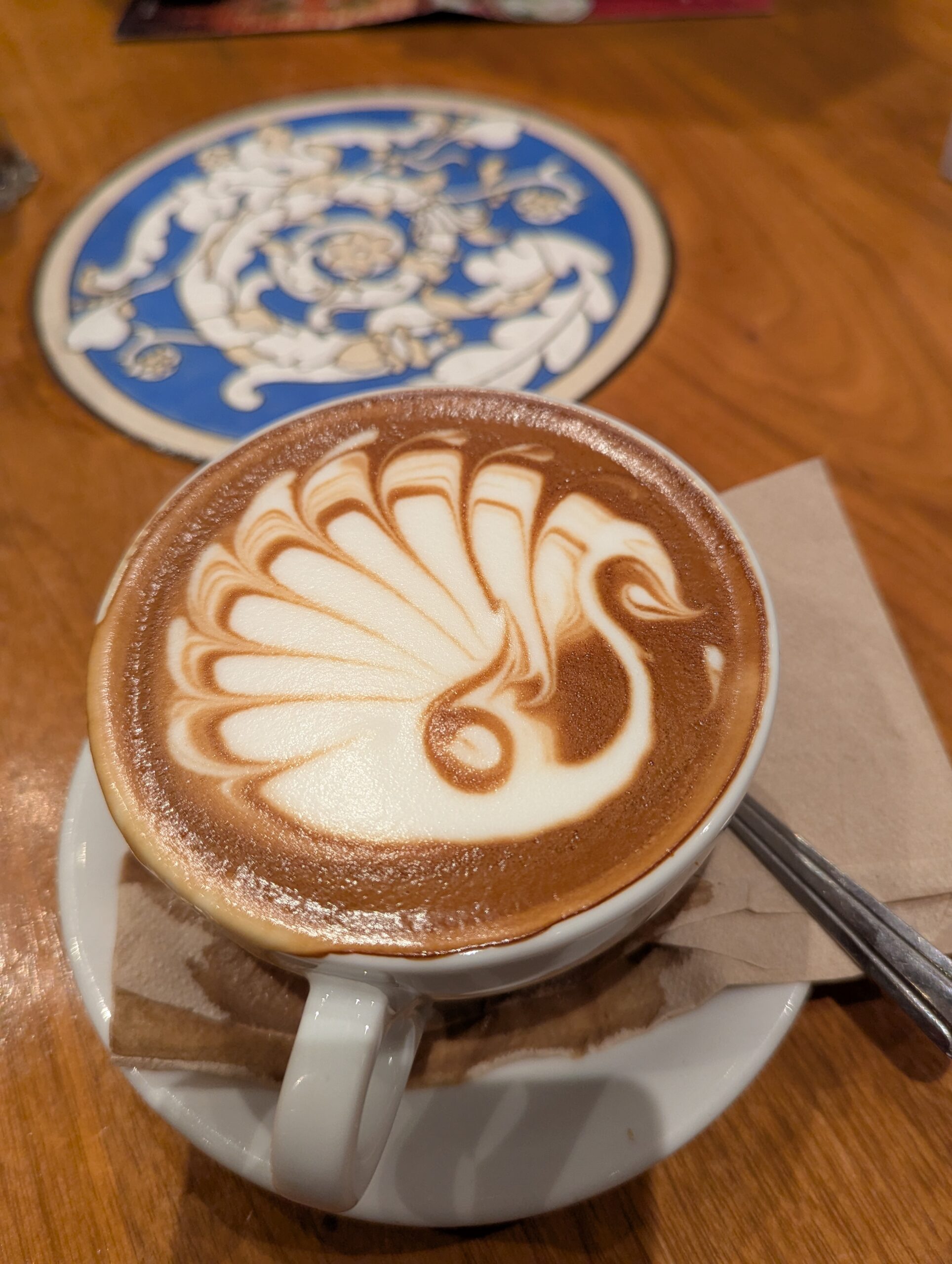
Coffee, I explained to the group, was a ritual I'd first shared with my father and later passed down to my own kids.
When I was perhaps sixteen, our family was financially in a place where my dad purchased an Italian espresso machine. Although I'd been meeting friends for coffee I got my driver's license in high school, there was something intimate (almost conspiratorial) about sitting down with him at the kitchen table and sharing that particular pleasure.
Later, during college, whenever I'd return home to visit dad and I would make it a point to share a daily espresso. We might even make an event of it and drive over to pick up my paternal grandfather so we could occupy a table at a sidewalk cafe as three generations sipped coffee together.
When I graduated college, I planned out my first independent travel experience. A friend and I were going to buy Eurorail passes and bum our way through Europe on a tight budget, but my friend bailed out at the 11th hour.
I committed to following through and had the time of my life subsisting on bananas, baguettes and drinkable yogurt (the cheapest foods I could find in any given country). Before I departed, my dad asked if, during a planned visit to Barcelona, I might buy him a few espresso spoons at a large department store that carried them, El Corte Ingles.
I remember some lame protest I made along the lines of, "It's my special trip, and you want me to detour to a department store to go shopping for you?!"
Like any people-pleasing child raised in a house where my parents' native language was guilt, I told him there was no way I was going to go to El Corte Ingles, and then as soon as I got to Barcelona, I went.
It was a revelation. The spoons were beautiful - a delight to behold, sensual to hold, an aesthetic form made functional. Not only did I buy him three or four sets, I bought a similar amount for myself.
When my wife and I got engaged, my parents gifted us an espresso machine (my wife, who does not drink coffee, was a mostly good sport).
As we raised the kids, I would let them use a spoon to salvage the sugary sludge at the bottom of my espresso cup, and they enjoyed it enough to want desperately to join me in drinking coffee.
I promised to brew and serve them their first espresso once they turned 15, and made good on my promise.
For most of their time in high school, my weekend daddy date of choice with them has been to head over to the independent coffee house that shares a heritage with the campus haunt from my college days.
Which brings us back to the day I found that precariously abandoned espresso spoon - I could have easily just washed it and put it away, but instead I made an issue of it, evoking an eye roll from the offending kid.
As I told this, the group looked at me like I was completely overlooking the obvious explanation, until suddenly I grasped it, too.
I missed my father terribly since his death, and the espresso spoons were a tangible reminder of this deeply pleasurable vice we indulged together. They were also my link to my kids. Of course it would cause me pain out of proportion if something threatened them.
It would never have passed muster for TV writing on an after-school special, but cliche as it appears on the page, it felt real.
I got some wonderful feedback from each member of the group. Explain to the kids that I acknowledge this defect and want to do better. Recruit them to help me recognize when I am about to fail so I can course correct. Explain why little things that seem insignificant can have deeper meaning.
The most obvious insights had required a community of people on a shared quest to make them visible to me.